PARTICLE & ENVIRONMENTAL MONITORING SENSORS
You cannot see most air problems. Fine dust, carbon dioxide and chemical vapours are invisible, and each needs its own sensor. This guide explains what each one tells you and what to do about it.
PART 24 OF 25 | 4 MIN READ | BY SUBODH RAJ
CO2: the ventilation indicator
People breathe out CO2. Outdoor air is about 420 ppm. Levels above roughly 1,000 ppm in a room usually mean poor ventilation, and above 2,000 ppm many people feel drowsy. CO2 sensors use infrared absorption, so they are stable and selective.
PM2.5 and PM10: the dust numbers
PM2.5 are particles smaller than 2.5 micrometres and can reach deep into the lungs. A laser dust sensor draws air past a beam and counts scattered light. Typical guideline values are an annual average of 5 micrograms per cubic metre and a 24-hour value of about 15 under recent WHO guidance.
Cleanrooms measure particles per cubic metre by size. A counter gives much more detail than a dust sensor and is used where a few particles matter, like pharma and electronics.
VOCs and gas
Paints, cleaners and glues give off volatile organic compounds. Low-cost MOS sensors show a trend. A photoionisation detector measures more accurately. Electrochemical sensors watch specific toxic gases in industrial areas.
Smoke detection
Optical smoke detectors see smoke scatter light. Ionisation types notice smoke changing current in a small chamber. Optical types respond better to smouldering fires, and ionisation types to fast flaming ones.
Together they decide comfort and storage safety. Keep indoor humidity between about 40 and 60 percent to limit mould and dust mites, and follow cold-chain limits for pharma storage.
Placement tips
- Place sensors at breathing height and away from windows, vents and cooking.
- Give a new sensor time to settle, often several minutes.
- Compare cheap sensors against a trusted reference now and then.
The 10 sensors in this part
Each card below shows the sensor in use, what it is and how it works, and where you will find it.
SENSOR 1 OF 10
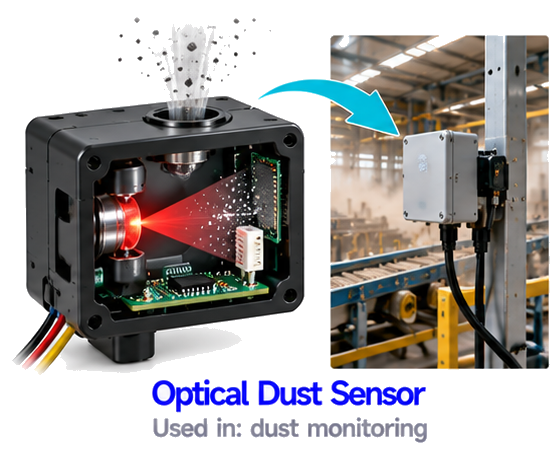
Optical Dust Sensor
An optical dust sensor has an LED or laser and a light detector in a small chamber. When dust particles pass through the beam, they scatter light, and the detector measures it. The amount of scattered light shows the dust density in the air.
USED IN
dust monitoring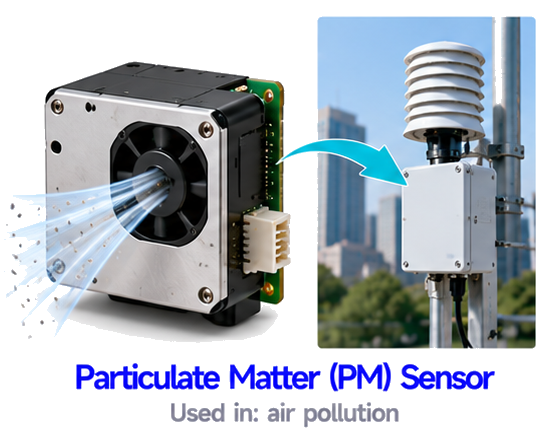
SENSOR 2 OF 10
Particulate Matter (PM) Sensor
A particulate matter (PM) sensor measures very small particles in the air, such as PM2.5 and PM10. It draws air through a laser beam and counts the scattered light. It helps to check air pollution and is used in air purifiers and monitoring stations.
USED IN
air pollution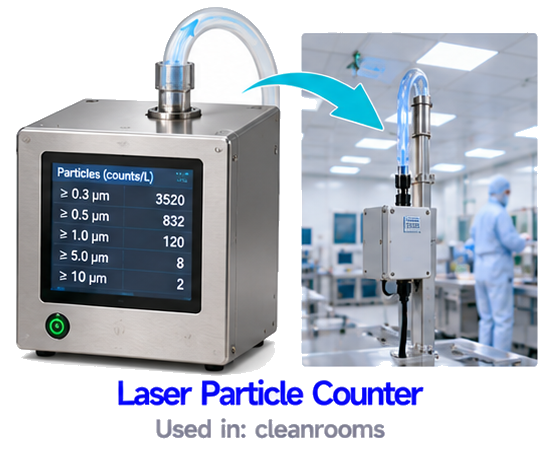
SENSOR 3 OF 10
Laser Particle Counter
A laser particle counter draws air through a laser beam and counts each particle as it passes, also measuring its size. It gives the number of particles per volume. It is used in cleanrooms and labs where air cleanliness is critical.
USED IN
cleanrooms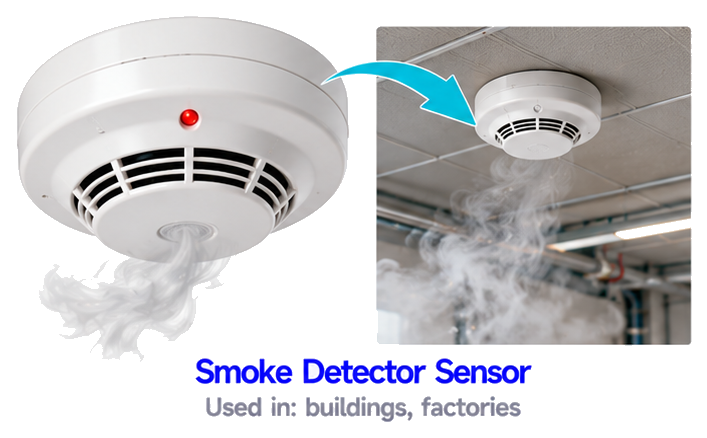
SENSOR 4 OF 10
Smoke Detector Sensor
A smoke detector sensor detects the particles of smoke in the air. An optical type sees smoke scatter light, and an ionisation type sees smoke change the current in a small chamber. It raises an alarm early to warn of a fire in buildings and factories.
USED IN
buildingsfactories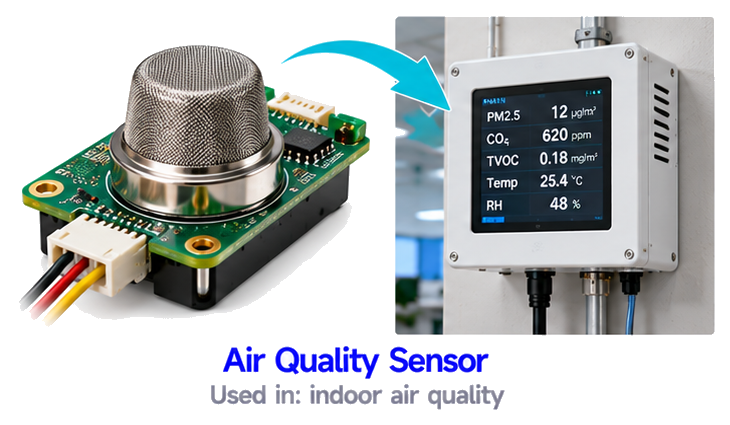
SENSOR 5 OF 10
Air Quality Sensor
An air quality sensor checks how clean the indoor air is. It may sense gases such as VOCs and CO2, and particles. It gives an index or reading of air quality. It is used in homes, offices and HVAC to control ventilation.
USED IN
indoor air quality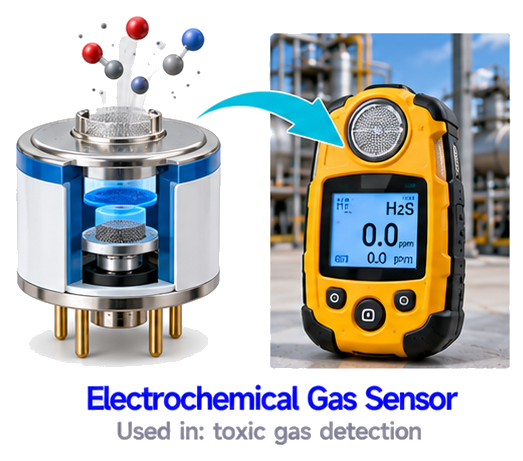
SENSOR 6 OF 10
Electrochemical Gas Sensor
An electrochemical gas sensor detects toxic gases through a chemical reaction at its electrodes. The reaction produces a small current that is proportional to the gas level. It is accurate for gases like CO and H2S and uses very little power.
USED IN
toxic gas detection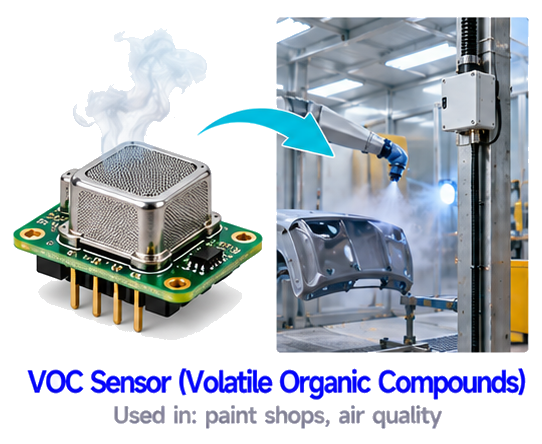
SENSOR 7 OF 10
VOC Sensor (Volatile Organic Compounds)
A VOC sensor detects volatile organic compounds, which are harmful vapours given off by paints, solvents, glues and cleaning products. It is often a metal-oxide or photoionisation type, which reacts to many such vapours. It is used for air-quality monitoring.
USED IN
paint shopsair quality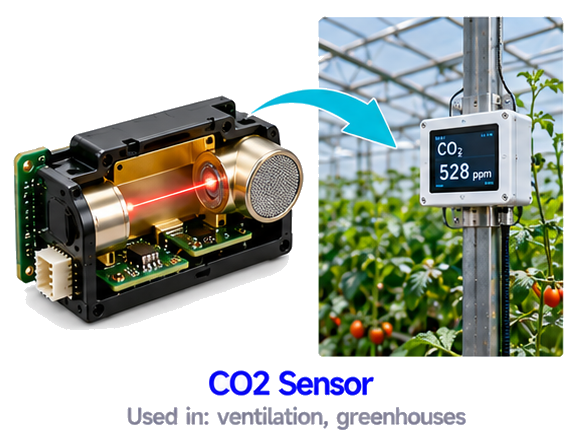
SENSOR 8 OF 10
CO2 Sensor
A CO2 sensor measures the level of carbon dioxide in the air, usually by infrared absorption. High CO2 means poor ventilation and can cause tiredness. It is used to control ventilation in buildings and greenhouses.
USED IN
ventilationgreenhouses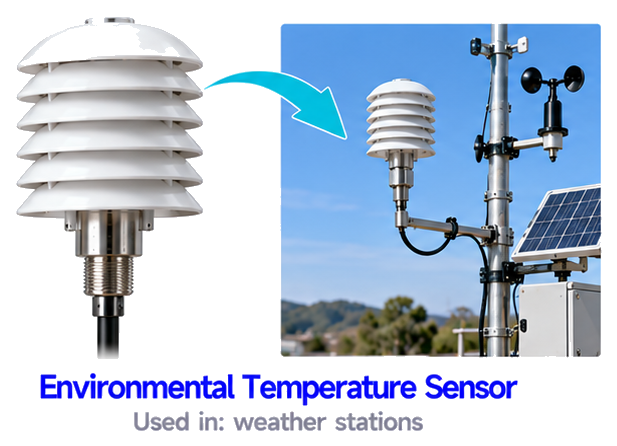
SENSOR 9 OF 10
Environmental Temperature Sensor
An environmental temperature sensor measures the temperature of the air in a room or outdoors. It is shielded from sun and rain for correct readings. It is used in weather stations, HVAC and storage areas.
USED IN
weather stations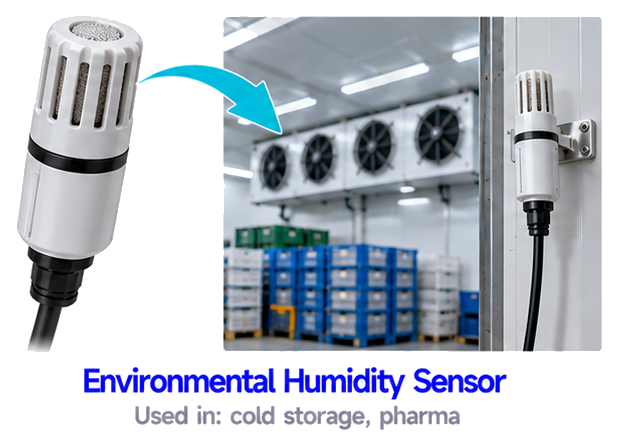
SENSOR 10 OF 10
Environmental Humidity Sensor
An environmental humidity sensor measures the moisture in the air of a room, store or outdoors. It usually uses a capacitive sensing film. It is important for comfort and for keeping goods safe in cold storage and pharma areas.
USED IN
cold storagepharmaWant all 250+ sensors in one place?
The Master Sensor Handbook explains every sensor with its picture, definition and where it is used.
Buy the Master Sensor Handbook | INR 199Tap the button to message us on WhatsApp
Written by Subodh Raj,
EngineerX Academy. Part 24 of 25 in the Industrial Sensors series.
Comments
Post a Comment