GAS & CHEMICAL SENSORS
A gas detector protects people only if it detects the gas that is actually present. Different sensors respond to different gases. Choosing by price alone is how plants end up with detectors that never alarm.
PART 14 OF 25 | 4 MIN READ | BY SUBODH RAJ
Safety: Gas detection is a safety function. Always follow the manufacturer's calibration schedule and your plant's safety rules.
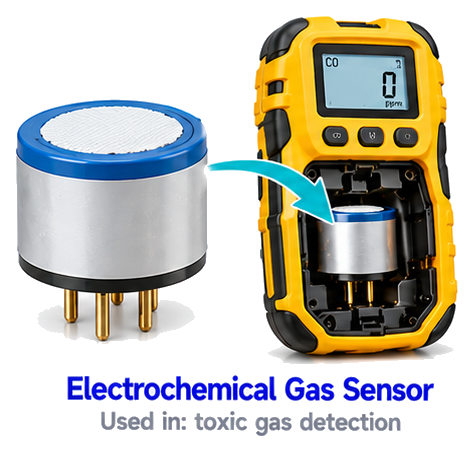
For carbon monoxide, hydrogen sulphide, chlorine and ammonia, electrochemical sensors are the usual choice. They are specific, sensitive and use almost no power. They wear out in two to three years and need regular calibration, because the electrolyte slowly dries.
Flammable gases
Catalytic-bead sensors burn a small amount of gas on a heated bead and detect the extra heat. They read in percent of the lower explosive limit (LEL). They can be poisoned by silicones and sulphur compounds, so keep hair products and sealants away. Infrared sensors detect hydrocarbons by absorption, last longer, and do not need oxygen. Choose them for methane and propane in demanding sites.
VOCs
A photoionisation detector uses UV light to ionise vapours and can find them at parts-per-billion level. MOS sensors are cheap for air-quality monitoring but are not selective.
Electrochemical oxygen sensors check for low oxygen in confined spaces. Zirconia sensors work hot and measure oxygen in boilers and engine exhaust to tune combustion.
Hydrogen
Hydrogen is light, fast and burns easily. Detectors should be placed high, because the gas rises. Use sensors designed for hydrogen, since many standard sensors respond poorly.
Placement rules that matter
- Heavy gases (propane, chlorine, H2S) collect low. Light gases (hydrogen, methane) rise.
- Place sensors near likely leak points, not in a corner of the room where air barely moves.
- Bump-test before use and calibrate on schedule with the right test gas.
The 12 sensors in this part
Each card below shows the sensor in use, what it is and how it works, and where you will find it.
SENSOR 1 OF 12
Electrochemical Gas Sensor
An electrochemical gas sensor has electrodes in an electrolyte. When the target gas reaches the electrode, a chemical reaction produces a small electric current, proportional to the gas concentration. It is very good for toxic gases such as CO and H2S and uses very little power.
USED IN
toxic gas detection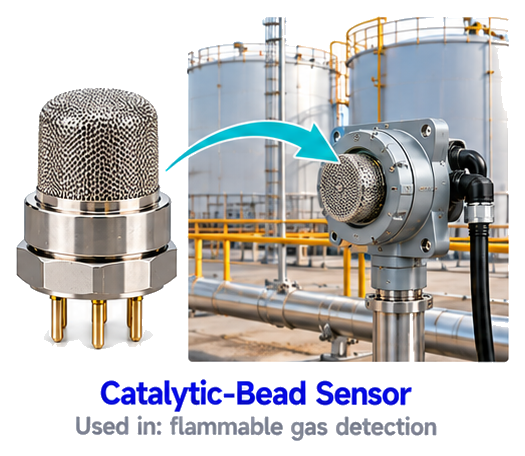
SENSOR 2 OF 12
Catalytic-Bead Sensor
A catalytic-bead sensor has a heated bead coated with a catalyst. When flammable gas touches it, the gas burns on the bead and makes it hotter, which changes its resistance. This is compared with a reference bead. It is widely used to detect flammable gas as a percentage of the lower explosive limit.
USED IN
flammable gas detection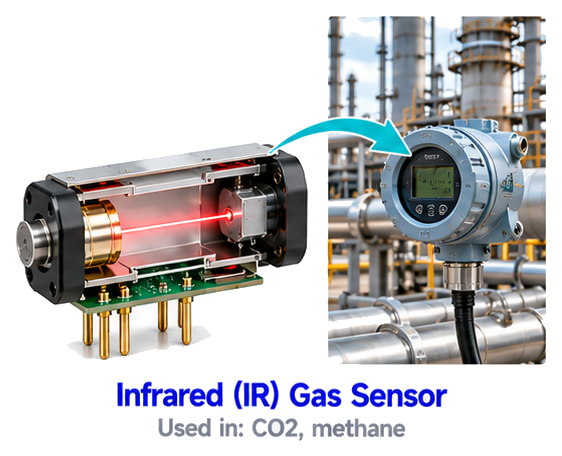
SENSOR 3 OF 12
Infrared (IR) Gas Sensor
An infrared (IR) gas sensor passes infrared light through a gas sample. Some gases, like CO2 and methane, absorb a specific wavelength, and the drop in light shows the gas concentration. It is stable, long-lasting and not poisoned by other gases.
USED IN
CO2methane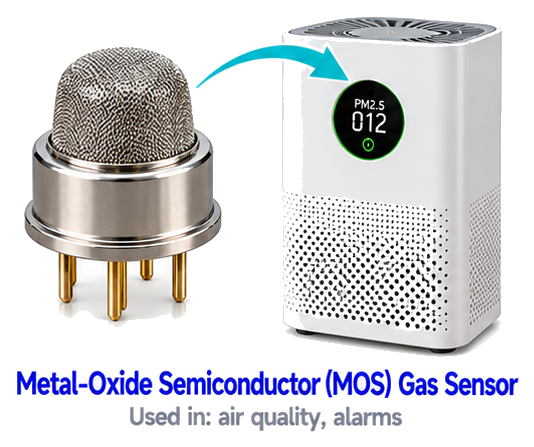
SENSOR 4 OF 12
Metal-Oxide Semiconductor (MOS) Gas Sensor
A metal-oxide semiconductor (MOS) gas sensor has a heated metal-oxide layer. When certain gases touch it, the layer's resistance changes. The change shows the presence of the gas. It is low cost, small and sensitive, but not very selective, so it is used in air-quality sensors and basic alarms.
USED IN
air qualityalarms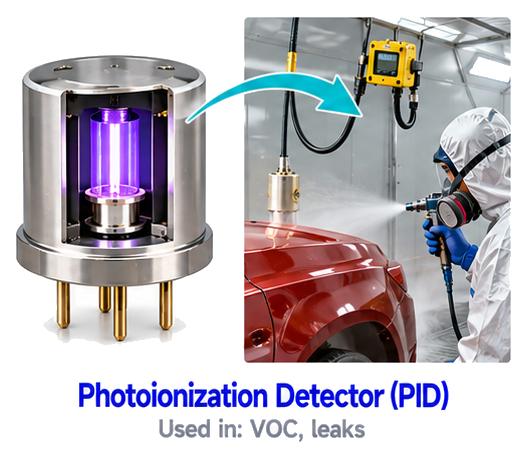
SENSOR 5 OF 12
Photoionization Detector (PID)
A photoionization detector (PID) uses ultraviolet light to ionise gas molecules. The ions create a small electric current that is measured, and it shows the concentration. It detects many VOCs at very low levels (ppb), so it is used for leak detection and air monitoring.
USED IN
VOCleaks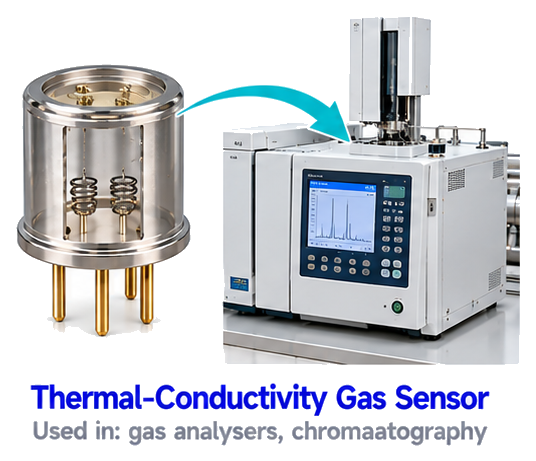
SENSOR 6 OF 12
Thermal-Conductivity Gas Sensor
A thermal-conductivity gas sensor compares how well a gas conducts heat with how well a reference gas does. A heated element cools differently in different gases, and the change in resistance shows the gas concentration. It is used for gases such as hydrogen and in gas analysers.
USED IN
gas analyserschromatography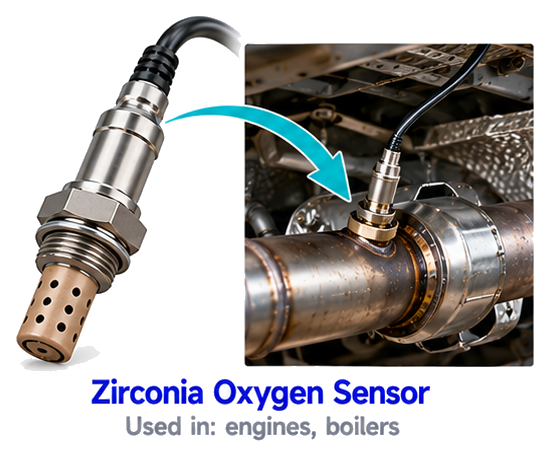
SENSOR 7 OF 12
Zirconia Oxygen Sensor
A zirconia oxygen sensor uses a heated ceramic made of zirconium dioxide. At high temperature the ceramic allows oxygen ions to pass, and a voltage is made between the two sides, depending on the oxygen difference. It is used in vehicle exhausts, boilers and furnaces to control combustion.
USED IN
enginesboilers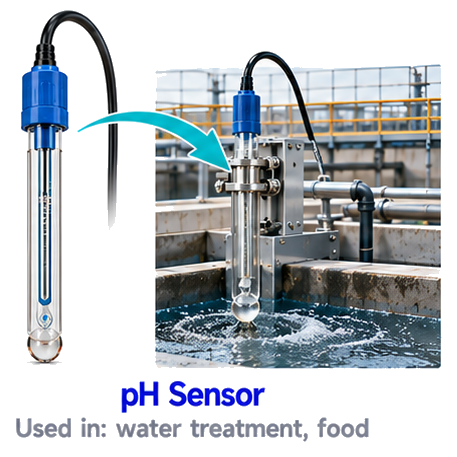
SENSOR 8 OF 12
pH Sensor
A pH sensor measures how acidic or basic a liquid is on a scale of 0 to 14, where 7 is neutral. It has a thin glass bulb and a reference electrode, and a voltage develops that depends on the hydrogen-ion level. It must be calibrated regularly and is used in water treatment and food.
USED IN
water treatmentfood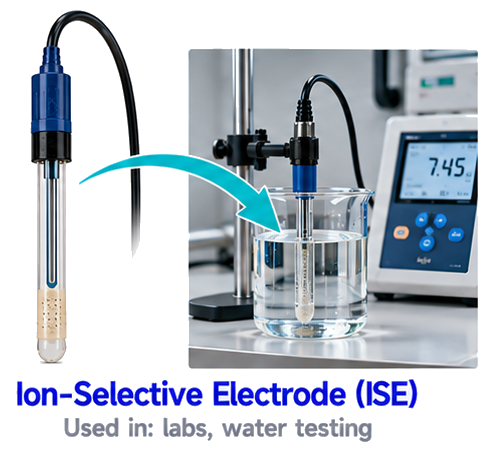
SENSOR 9 OF 12
Ion-Selective Electrode (ISE)
An ion-selective electrode (ISE) has a special membrane that reacts to only one type of ion, such as sodium, nitrate or fluoride. The voltage that develops is proportional to the concentration of that ion. It is used in labs, water testing and process control.
USED IN
labswater testing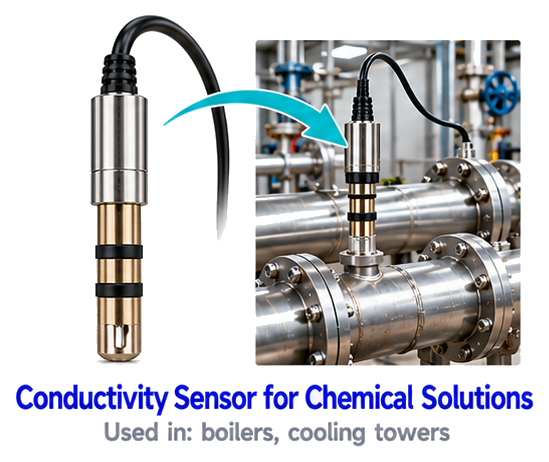
SENSOR 10 OF 12
Conductivity Sensor for Chemical Solutions
A conductivity sensor for chemical solutions measures how well a liquid carries electric current. More dissolved salts or ions mean higher conductivity. It is used to check concentration, purity and mixing in boilers, cooling towers and chemical processes.
USED IN
boilerscooling towers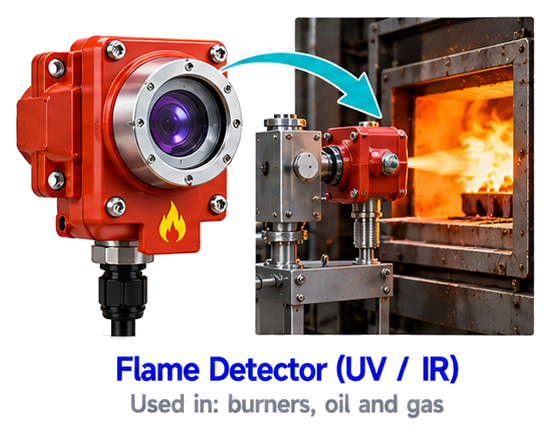
SENSOR 11 OF 12
Flame Detector (UV / IR)
A flame detector (UV/IR) looks for the ultraviolet or infrared radiation produced by flames. When it sees the typical flame pattern, it gives an alarm. It reacts in a fraction of a second, so it is used on burners, in oil and gas plants and in fire protection systems.
USED IN
burnersoil and gas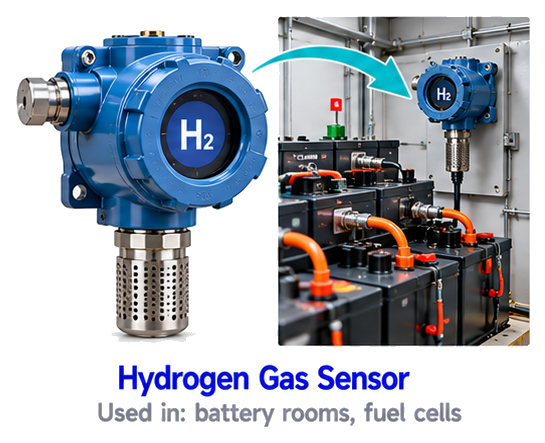
SENSOR 12 OF 12
Hydrogen Gas Sensor
A hydrogen gas sensor detects hydrogen leaks. Hydrogen is very light and burns easily, so early detection is important. Different types are used, such as catalytic, thermal or semiconductor, to give an alarm at a low concentration. It is used in battery rooms and fuel-cell systems.
USED IN
battery roomsfuel cellsWant all 250+ sensors in one place?
The Master Sensor Handbook explains every sensor with its picture, definition and where it is used.
Buy the Master Sensor Handbook | INR 199Tap the button to message us on WhatsApp
Written by Subodh Raj,
EngineerX Academy. Part 14 of 25 in the Industrial Sensors series.
Comments
Post a Comment