Flow Measurement in Plain Words: A Conversation Between a Senior and a Trainee
FLOW SENSORS
Arun is a new trainee. Meena has twenty years in a water and chemical plant. Their talk on a pump-house walk covers most of what flow sensors do.
PART 8 OF 25 | 5 MIN READ | BY SUBODH RAJ
Arun
Why are there so many types of flowmeter? Is flow not just flow?
Why are there so many types of flowmeter? Is flow not just flow?
Meena
The liquid decides. Water, oil, steam and slurry behave differently, so one meter does not fit all.
The liquid decides. Water, oil, steam and slurry behave differently, so one meter does not fit all.
Arun
Which one do we use for dirty water?
Which one do we use for dirty water?
Meena
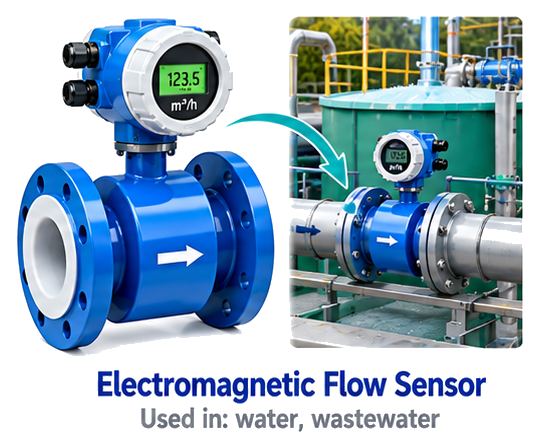
Electromagnetic. It has nothing inside the pipe to block, so sludge does not hurt it. The only rule is that the liquid must conduct electricity, so it will not work on pure oil.
Electromagnetic. It has nothing inside the pipe to block, so sludge does not hurt it. The only rule is that the liquid must conduct electricity, so it will not work on pure oil.
Arun
And for oil?
And for oil?
Meena
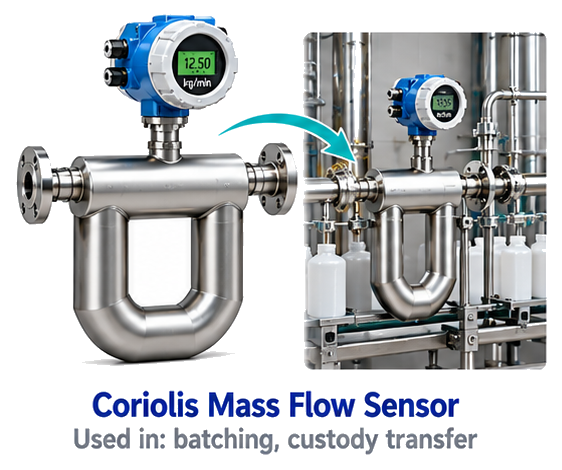
Positive displacement or Coriolis. Positive displacement traps a fixed volume each turn, so thick oil is no trouble. Coriolis measures mass directly and is very accurate, but it costs more.
Positive displacement or Coriolis. Positive displacement traps a fixed volume each turn, so thick oil is no trouble. Coriolis measures mass directly and is very accurate, but it costs more.
Arun
What about that clamp-on box on the cooling line?
What about that clamp-on box on the cooling line?
Meena
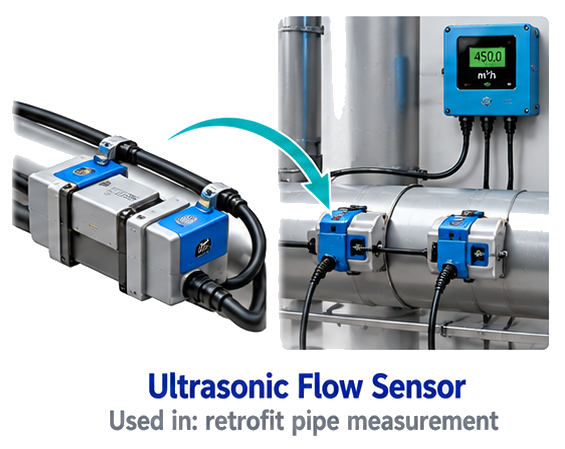
Ultrasonic. It sends sound through the pipe wall, so we fitted it without cutting the pipe. Good for checking a line quickly. It needs a clean, full pipe, because bubbles confuse it.
Ultrasonic. It sends sound through the pipe wall, so we fitted it without cutting the pipe. Good for checking a line quickly. It needs a clean, full pipe, because bubbles confuse it.
Arun
Why do we still use orifice plates? They look old.
Why do we still use orifice plates? They look old.
Meena
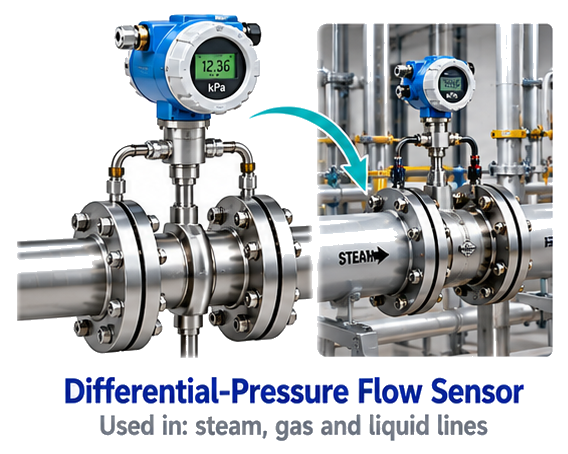
Because they are cheap, proven and well understood. The meter measures pressure drop across a narrow point, and flow follows the square root of that drop. The cost is some lost pressure.
Because they are cheap, proven and well understood. The meter measures pressure drop across a narrow point, and flow follows the square root of that drop. The cost is some lost pressure.
Arun
What is square root about it?
What is square root about it?
Meena
Double the flow and the pressure drop becomes four times. So a transmitter at the low end of its range gives poor accuracy. Pick the range carefully.
Double the flow and the pressure drop becomes four times. So a transmitter at the low end of its range gives poor accuracy. Pick the range carefully.
Arun
Is vortex good for steam?
Is vortex good for steam?
Meena
Yes. A bar in the flow makes small whirls, and the number of whirls per second follows the speed. No moving parts, so steam is fine. But it needs a minimum flow to make clear whirls.
Yes. A bar in the flow makes small whirls, and the number of whirls per second follows the speed. No moving parts, so steam is fine. But it needs a minimum flow to make clear whirls.
Arun
What is the one mistake to avoid?
What is the one mistake to avoid?
Meena
Putting the meter in the wrong place. Most meters need straight pipe before and after them. Without it, the reading is wrong even if the meter is perfect.
Putting the meter in the wrong place. Most meters need straight pipe before and after them. Without it, the reading is wrong even if the meter is perfect.
Quick takeaways
- Dirty water: electromagnetic.
- Thick liquids: positive displacement or Coriolis.
- Retrofit checks: clamp-on ultrasonic.
- Gas and air: thermal mass or vortex.
- Always leave straight pipe run, and always check the liquid is compatible.
The 12 sensors in this part
Each card below shows the sensor in use, what it is and how it works, and where you will find it.
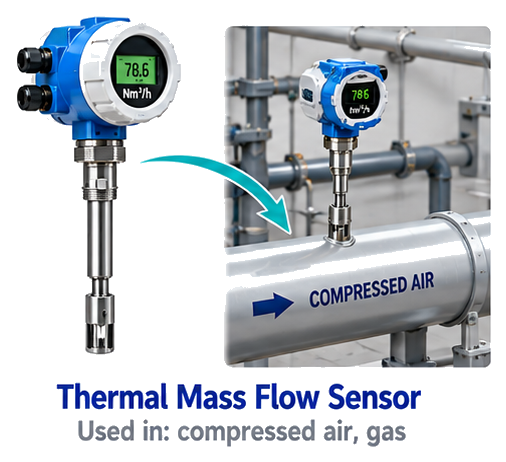
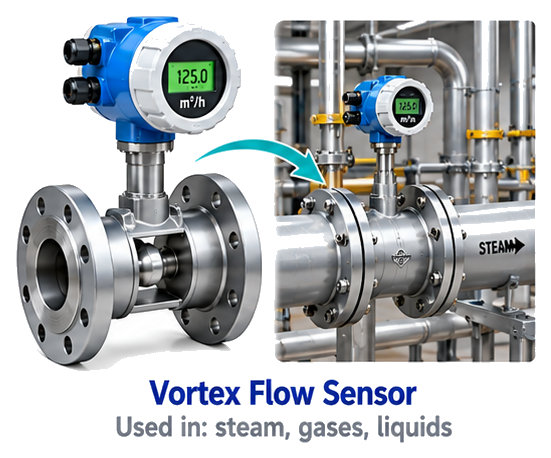
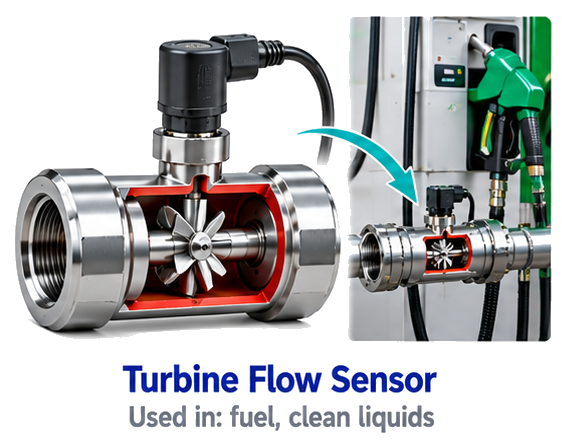
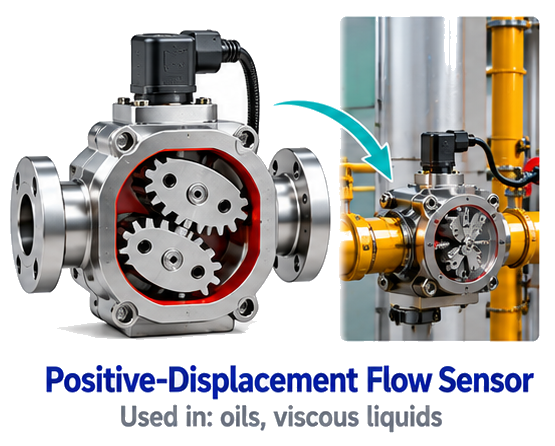
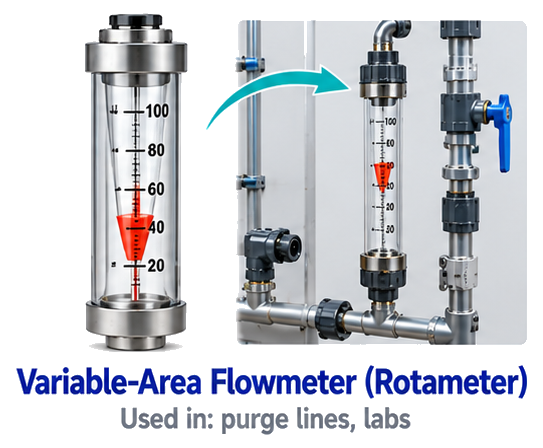
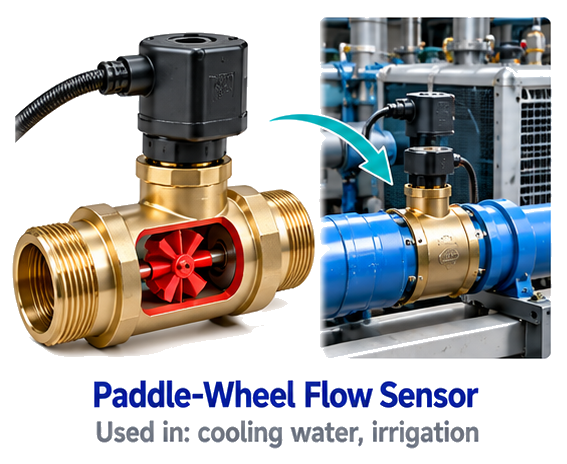
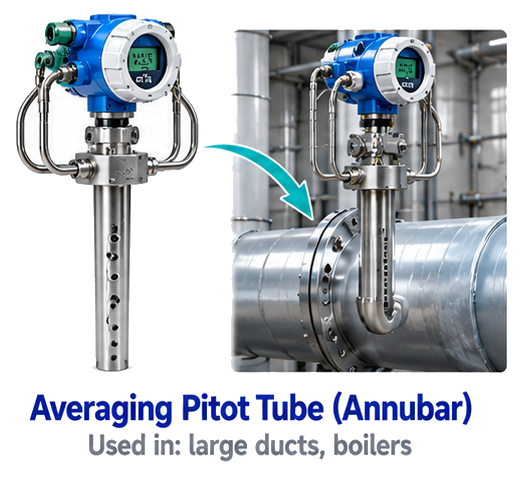
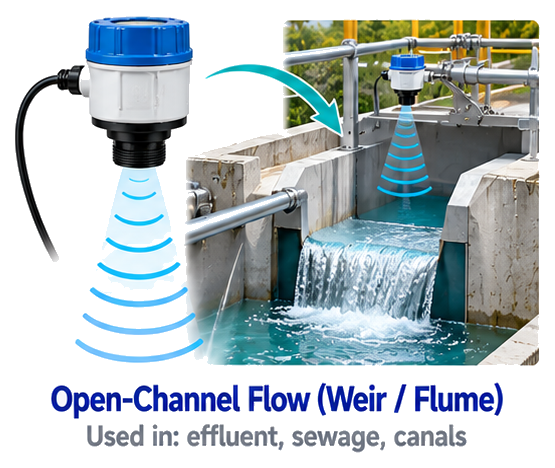
Want all 250+ sensors in one place?
The Master Sensor Handbook explains every sensor with its picture, definition and where it is used.
Buy the Master Sensor Handbook | INR 199Tap the button to message us on WhatsApp
Written by Subodh Raj, EngineerX Academy. Part 8 of 25 in the Industrial Sensors series.
Comments
Post a Comment