Humidity and Moisture Sensors: 12 Facts Worth Knowing
HUMIDITY & MOISTURE SENSORS
Humidity is simple to describe and tricky to measure. Here are twelve facts that help you choose, place and trust a moisture sensor.
PART 13 OF 25 | 4 MIN READ | BY SUBODH RAJ
1
Relative humidity depends on temperature.
Warm air holds more water. The same amount of water gives a lower RH if the air warms. That is why a sensor in the wrong place reads wrongly.
Warm air holds more water. The same amount of water gives a lower RH if the air warms. That is why a sensor in the wrong place reads wrongly.
2
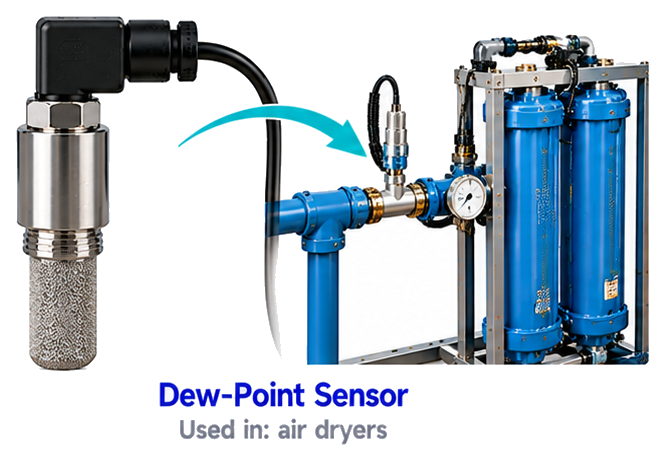
Dew point is the more stable number.
It tells you the actual amount of moisture in the air, and it does not change when the temperature changes.
It tells you the actual amount of moisture in the air, and it does not change when the temperature changes.
3
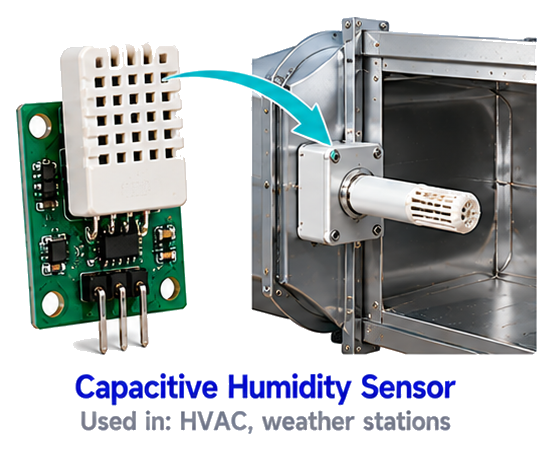
Capacitive sensors are the standard.
A polymer film takes up water vapour and changes capacitance. They are accurate, fast and stable, and sit in most HVAC and weather instruments.
A polymer film takes up water vapour and changes capacitance. They are accurate, fast and stable, and sit in most HVAC and weather instruments.
4
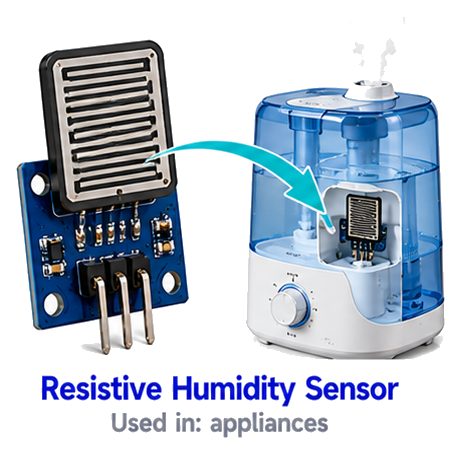
Resistive sensors are cheaper but less precise.
Fine for appliances and indicators, but they drift more over time.
Fine for appliances and indicators, but they drift more over time.
5
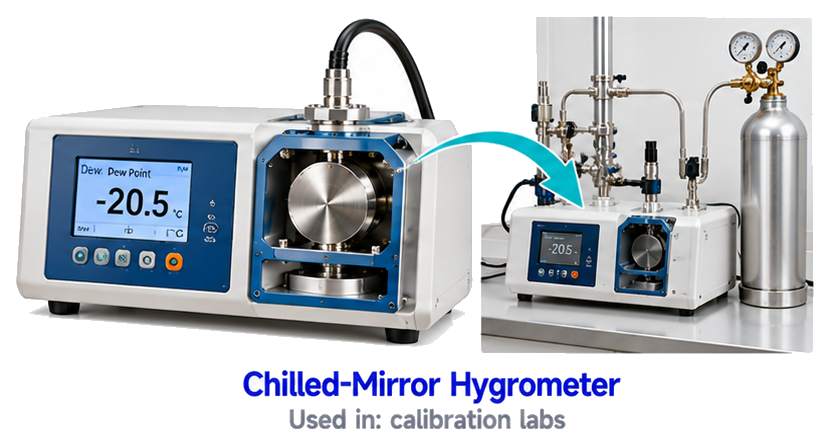
Chilled-mirror hygrometers are the reference.
They cool a mirror until dew forms. Labs use them to calibrate other sensors.
They cool a mirror until dew forms. Labs use them to calibrate other sensors.
6
Contamination ruins sensors.
Dust, oil and chemical vapour can coat the film. Use a protective filter cap in dirty places.
Dust, oil and chemical vapour can coat the film. Use a protective filter cap in dirty places.
7
Drift is normal.
Expect 1 to 2 percent RH per year. Check against a salt-solution standard or a reference once a year.
Expect 1 to 2 percent RH per year. Check against a salt-solution standard or a reference once a year.
8
Self-heating spoils readings.
If electronics sit next to the sensing element, they warm the air around it. Mount the sensor away from heat sources.
If electronics sit next to the sensing element, they warm the air around it. Mount the sensor away from heat sources.
9
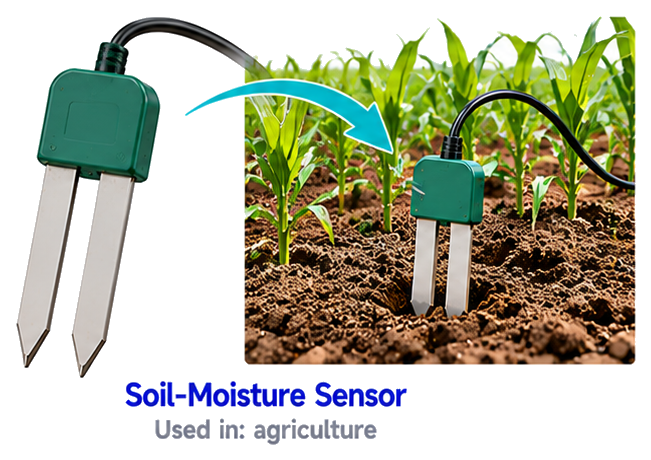
Soil moisture is not just 'wet or dry'.
Capacitive soil probes measure water content around the probe. They must make good contact with soil, with no air gaps.
Capacitive soil probes measure water content around the probe. They must make good contact with soil, with no air gaps.
10
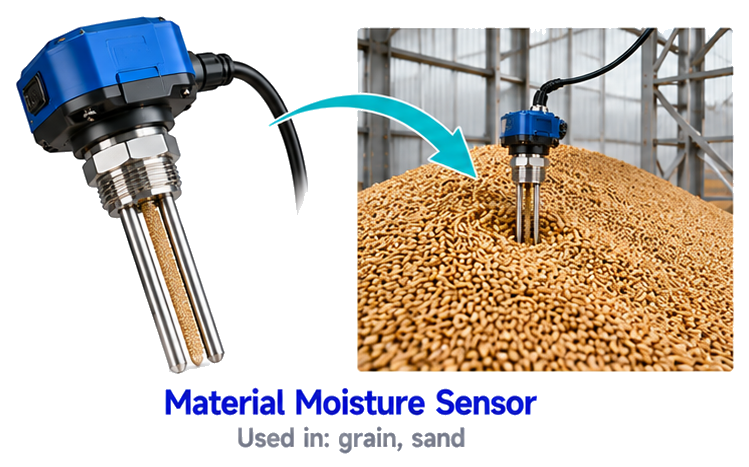
Grain and sand moisture changes weight and price.
Moisture in grain affects storage life, and in sand it affects concrete strength. Microwave and infrared sensors measure it on the move.
Moisture in grain affects storage life, and in sand it affects concrete strength. Microwave and infrared sensors measure it on the move.
11
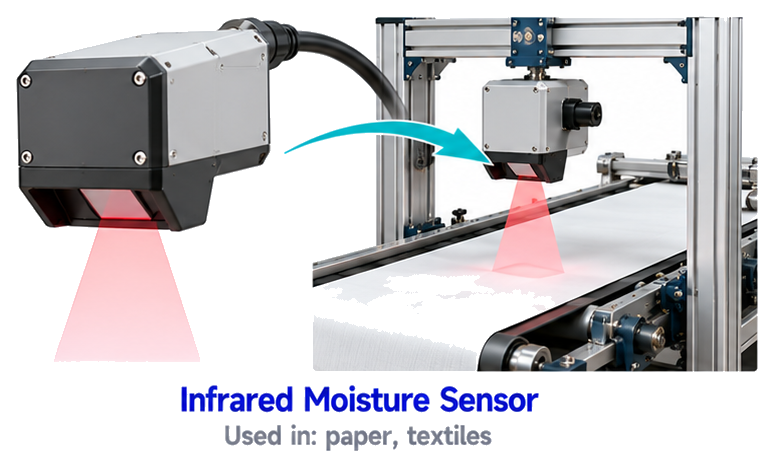
Infrared moisture sensors measure only the surface.
They compare absorption at two wavelengths, so they see the top layer of paper, textile or food.
They compare absorption at two wavelengths, so they see the top layer of paper, textile or food.
12
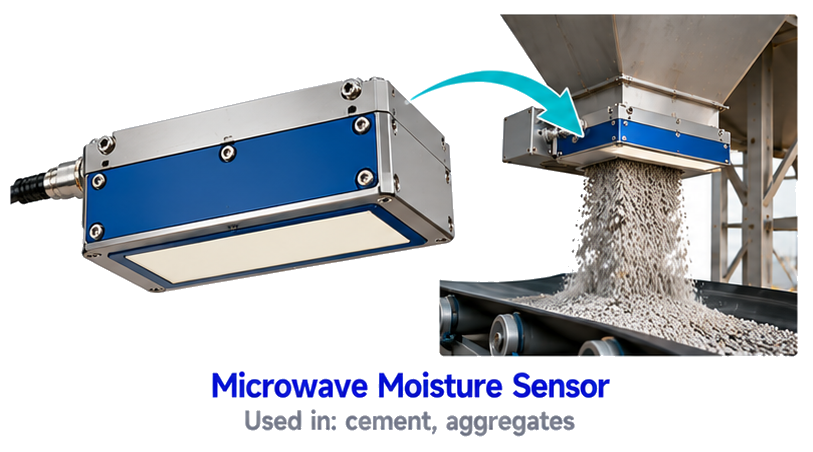
Microwave sensors look inside the material.
Water slows and weakens microwaves strongly, so the sensor reads the bulk moisture of cement or aggregate.
Water slows and weakens microwaves strongly, so the sensor reads the bulk moisture of cement or aggregate.
The 9 sensors in this part
Each card below shows the sensor in use, what it is and how it works, and where you will find it.

Want all 250+ sensors in one place?
The Master Sensor Handbook explains every sensor with its picture, definition and where it is used.
Buy the Master Sensor Handbook | INR 199Tap the button to message us on WhatsApp
Written by Subodh Raj, EngineerX Academy. Part 13 of 25 in the Industrial Sensors series.
Comments
Post a Comment